


Using the FortiGate to protect against PHP vulnerabilities CVE-2026-109618 and CVE-2026-109619
Description | This article discusses the recent critical-severity vulnerabilities for PHP (CVE-2026-109618 and CVE-2026-109619, published 2026-10-21) and how the FortiGate can protect affected services until they can be patched. |
Scope | FortiGate, IPS, OT Virtual Patch; |
Solution | Important: Refer to the PSIRT Advisory FG-IR-26-186 regarding the above two CVEs and how they relate to Fortinet products. At the time of this writing, FortiOS itself is not impacted by these PHP-specific CVEs. Instead, this article discusses how the FortiGate can be used to protect other services that do use PHP.
At this time, Fortinet has released both IPS signatures and Operational Technology (OT) Virtual Patching signatures for both of the above CVEs. For more information on these signatures, refer to the following entries on the FortiGuard Labs encyclopedia:
Note: Check the above FortiGuard entries for information on the specific database version that introduces support for the associated signatures, then check the FortiGate to ensure that it has updated to a matching or later database version (no firmware updates required). At the time of this writing, support was added as of the following versions:
Once the databases are updated on the FortiGate, the signatures can be checked under Security Profiles -> IPS Signatures:
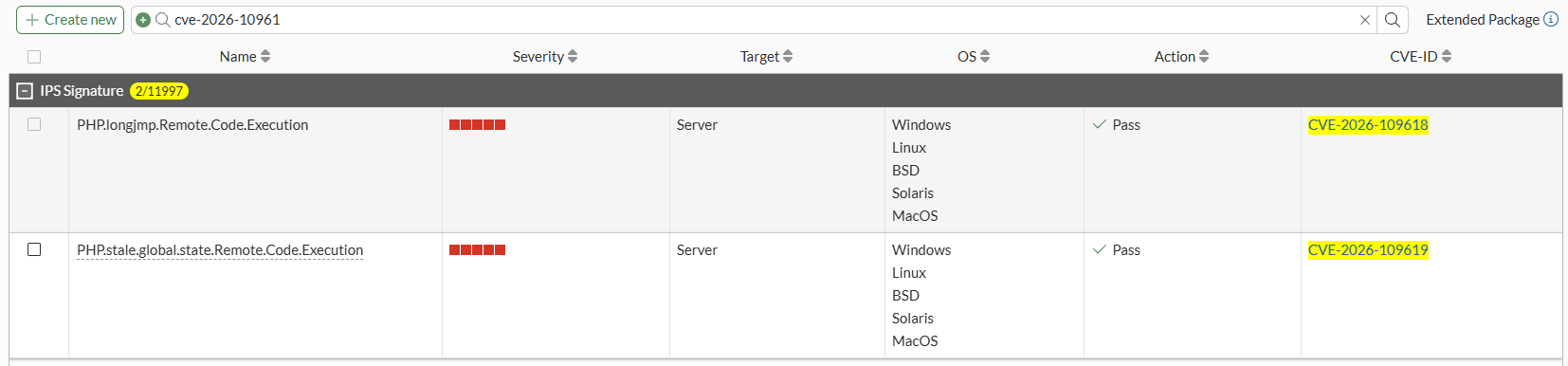
Finally, ensure that the new signatures are loaded into an IPS sensor or Virtual Patching Profile and then assigned to an appropriate Firewall Policy to begin inspecting traffic being sent to your potentially-vulnerable web servers. For more info on configuring IPS sensors and Virtual Patching profiles, refer to the following documentation:
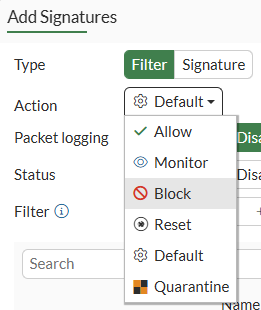
Important: The default action of the IPS-based signatures in definition 37.317 is set to Pass. The default action of the IPS-based signatures in definition 37.319 is set to Drop. (OT Virtual Patch signatures do not include default actions and follow the Action set within the Virtual Patching profile).
When adding the signatures to an IPS sensor via rule entries, administrators must change the Action from Default to Block (suggested), Reset, or Quarantine in order to deny the matching traffic:
Additionally, consider that SSL Deep Inspection may be required to completely inspect traffic, particularly when forwarding encrypted HTTPS traffic. See also:
Additional notes:
Related articles: PHP2Shell Remote Code Execution Vulnerabilities (Fortinet Threat Signal Report) How to block PHP2Shell (CVE-2026-109618, CVE-2026-109619) on FortiWeb |
